
When I was one year old, I was diagnosed with tuberculosis.
As my mother told me much later, I was started on a medication designed to halt the rapid progression of TB, an often-fatal contagious bacterial infection.
My mother never told me the name of the medicine, but with a little research I am now virtually certain it was isoniazid. The drug interferes with the creation of mycolic acid, which builds the walls of TB bacteria cells. Without the “walls” you might say the bacteria die of exposure.
My investigation into my history led me to a pioneering researcher for treating childhood tuberculosis. As a female, Edith Maas Lincoln, born in the 1890s, had a very low chance of becoming a physician, but she graduated from medical school in 1916. She started the Children’s Chest Clinic at Bellevue Hospital in 1922, an era in which children living in crowded urban conditions were vulnerable to contracting TB. One of every five children admitted to the hospital’s TB ward died within a year.
Dr. Lincoln and her peers spent decades studying TB, which ultimately created a scientific basis for treatment and prevention of what had been an incurable illness. She and a co-author published a seminal text, Tuberculosis in Children, in 1963. That was the year I might have died* had she and other researchers not figured out, among other things, that isoniazid prevented the TB bacteria from surviving.
While researching, I assumed that isoniazid had long been replaced by other medications. I was wrong.
It is still used today to stop tuberculosis from developing into the life-threatening illness it remains. Babies and young children are especially vulnerable to dying from TB. An estimated 10.7 million people worldwide fell ill with TB in 2024, according to the World Health Organization. It killed 1.2 million.
What I also found in my research was disheartening and agonizing. The supply from the United States of isoniazid and other medications and services to prevent and treat TB in developing countries was effectively halted in February 2025 by the Department of Government Efficiency, or DOGE, the group led by Elon Musk. This was primarily accomplished via eliminating the United States Agency for International Development (USAID). As Musk wrote mirthfully on X: “We spent the weekend feeding USAID into the wood chipper. Could gone [sic] to some parties. Did that instead.”
As reported by The New York Times, USAID did not pay for all aspects of TB prevention and treatment in developing countries. But in nations like Kenya, it did enough such that the end of most of its funding meant chaotic disruptions to processing and reporting of tests, prescribing for people with the disease, shipping of medications like isoniazid, and tracking of cases that demonstrate national progress or lack thereof. The disruptions were so extensive that the Kenyan tuberculosis public-health system was effectively brought to a halt.
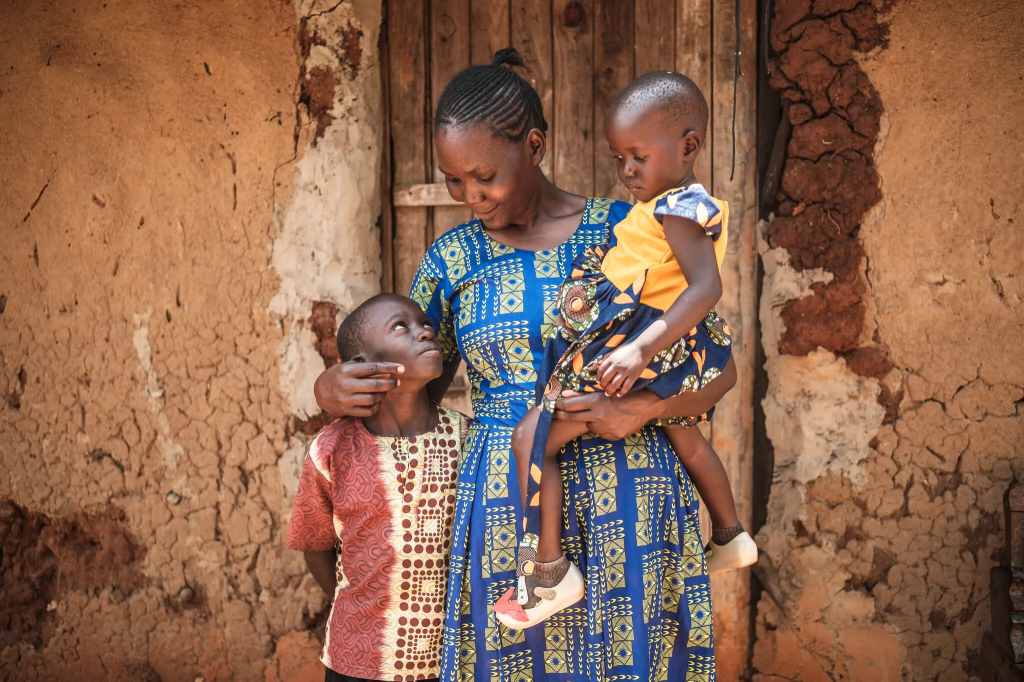
A New York Times photo of two Kenyan children, Philemon, 8, and his sister Desma, 3, who were treated for TB but still symptomatic. A followup sputum test conducted at the time of the Trump inauguration was left unanalyzed due to the halt of USAID funding.
A study published in The Lancet demonstrated that USAID funding had resulted in reductions in tens of millions of deaths from HIV/AIDS, malaria, tropical diseases, TB, nutritional deficits, and other maladies. It further projected that the Trump funding cuts, if not replaced or reinstated, would result in roughly 14 million more deaths — including more than 4.5 million in children younger than 5 years of age — by 2030. (Small parts of USAID funding that weren’t eliminated were transferred to the U.S. State Department.)
It’s difficult to report on current deaths from diseases like TB in countries like Kenya, because USAID was the agency that typically provided funds that helped clinics or other agencies track them. But journalists have found evidence, as you can see here and here.
The Trump administration, not surprisingly given its record, denies and lies. Secretary of State Marco Rubio said at a US House Foreign Affairs Committee hearing that USAID cuts had caused no deaths, adding in an exchange with Congressman Gabe Amo, a Democrat from Rhode Island, “No children are dying on my watch.”
The Washington Post wrote a fact-check article in which it unpacked Rubio’s lies, and added context that weakened his defense that the United States should be lauded because other countries either have provided little foreign aid or have been reducing it.
Rubio wasn’t alone in lying. Elon Musk shared a video in February 2025 claiming USAID had paid celebrities to travel to Ukraine. It was actually a fabricated video produced by Russia, said Darren Linvill, co-director of Clemson University’s Media Forensics Hub, in a post on X.
NBC News further unveiled how Musk had promoted the fringe conspiracy theories of ex-Trump administration official and conservative researcher Mike Benz to untruthfully portray USAID as engaging in “mass censorship of Americans, as well as global efforts to manipulate social media, rig elections and quash dissent.”
The lying is beyond shameful. Pause and think about one small part of it for a moment: A representative for the US government passed on to its citizens as the legitimate truth a piece of Russian propaganda.
And the lack of truth is especially unfortunate because there is a case for reforming humanitarian assistance. Critics, including the Trump administration, would likely take the Kenya story I related above about TB efforts nationwide ceasing and say: That’s the problem – the US pulls out and everything falls apart. We need a sustainable long-term solution with the recipient countries taking a lead role.
The Trump administration issued a new foreign aid policy in September 2025, criticizing the decades-old one as wasteful and promoting dependence. Its new foreign-aid policy now sends funds directly to other countries’ governments, with the recipient nations co-investing with the long-term intention of developing their own systems of care. **
This model is not new; former USAID administrators Deborah Kaliel and Phillip Palmer write in Foreign Policy they argued for years under Democratic and Republican administrations for a shift along these lines. They warn, however, that the change is occurring so rapidly that it risks worsening public health, causing increases in illness and death, as well as resulting in more fraud, waste, and inefficiency. Or as they put it, “replacing one flawed system with another.”
I really hope that doesn’t happen, but am very afraid it will. I don’t think it takes an expert to see that dismantling USAID almost literally overnight — and throwing away all of its expertise that had been built over decades — was a terrible decision. It was like crashing a plane mid-flight, based on the decision of a billionaire auto and space executive. Would Musk accept me or some other non-expert telling him he should immediately forever close a part of his company and fire all of its employees?
Instead of shutting it down, the administration could have ordered USAID to start shifting course — and made a gradual transition to the direction it wanted, bringing along a wealth of expertise that could have provided great feedback, saving millions of lives in the process. But instead they chose to lie and portray the civil servants who had a track record of saving lives, in the words of President Trump, as “radical lunatics.”
Footnotes
* My TB test could well have been a false positive; that was a known possibility in 1962. But unlike today, there was no blood test to turn to. Because of the research Dr. Lincoln and others conducted, the US government was on its way to an official recommendation in 1965 of isoniazid for all patients with a positive skin test, no matter their symptoms. The logic is simple: If the patient did not have TB, the medication was unlikely to harm. If TB was present and no action was taken, one’s life was at stake (and perhaps that of loved ones, given that it is an infectious disease).
Although it had a potential miraculous benefit, isoniazid gave me side effects that have reverberated throughout my life. Specifically, as my mother later related to me, its bitter, metallic taste caused me to vomit and refuse foods — and I now understand that it ultimately resulted in conditioned taste aversion. In plain English: These experiences turned me from an excellent eater into a very picky one. They also heightened my anxiety and made me feel the sting of stigma three times daily as the weird boy who wouldn’t eat much of anything — not even “kid” foods like pizza, spaghetti or fried chicken (there were no nuggets in the 1960s). When I got into adolescence, I very gradually began tasting and eating foods I had avoided, one by one — a long journey to “normal” eating lasting into adulthood. I still remember worrying what my college girlfriend’s parents would serve for lunch when I met them the first time — and what they might think of me if I struggled to eat it. The irony is not lost on me that my gradual tasting was a form of exposure therapy — the method I now use as a psychologist to treat children with anxiety.
** The new Trump foreign aid policy is also explicitly America First, with the document issued by the US State Department called the America First Global Health Strategy. Its executive summary states at its conclusion: “We will also leverage our foreign assistance to promote American companies and American innovations abroad” and “promote American health innovations and products more broadly globally, helping ensure that American innovation becomes a cornerstone of health systems around the world.”
Of course, everything has pros and cons. An article in Forbes notes: “Concerns have been raised that the administration has been negotiating these agreements with minimal public disclosure. This has fueled concerns among health experts and recipient governments that the deals are structured around U.S. economic and resource extraction interests.”

